
21 October 2026 at 03:02
Trauma-Informed
Trauma-Informed Approach
Some experiences don’t end when they happen. They carry into the present as tension in the body, caution in relationships, or a sense of being on alert that we can’t quite explain. A trauma-informed approach starts from the understanding that these traces are not weaknesses or flaws. They are ways of adapting that developed to protect you during a difficult time, and once truly served you.
This is not a single technique but a perspective that shapes the whole process. The focus shifts from “What’s wrong with you?” to “What happened to you, and how did you cope with it?” In this light, many reactions that look like problems become part of a story that makes sense.
What does this look like in our sessions?
Safety first: Before turning to difficult topics, we take time for you to feel safe enough in this room and in this relationship. Trust is not something built once at the start and left behind. It is ground we tend to in every session.
You are in control: You decide what to share, when, and how much. We can work without going into detail. Pausing, taking a break or changing direction is always possible.
Transparency: We talk openly about what we are doing and why. The process is not something applied to you from above, but a path we build together.
Listening to the body: The traces of trauma often show up in the body before they find words. We learn to pay attention to your breath, your bodily sensations, and the small moments that connect you to the here and now.
Seeing your strengths: Recognizing the resources that have kept you going until now is as important as talking about the difficulties.
Considering the context: We look at what you have been through not only as an individual matter, but together with your relationships, your family and the social conditions you live in.

Who might it be suitable for?
Anyone who has lived through severe or repeated difficult experiences, who feels constantly on alert and finds it hard to relax, who struggles to trust in relationships, or who knows the feeling of “this should be over by now, but it isn’t.” This approach is not a separate method. It is a sensitivity woven into person-centered, schema-focused or cognitive behavioral work.
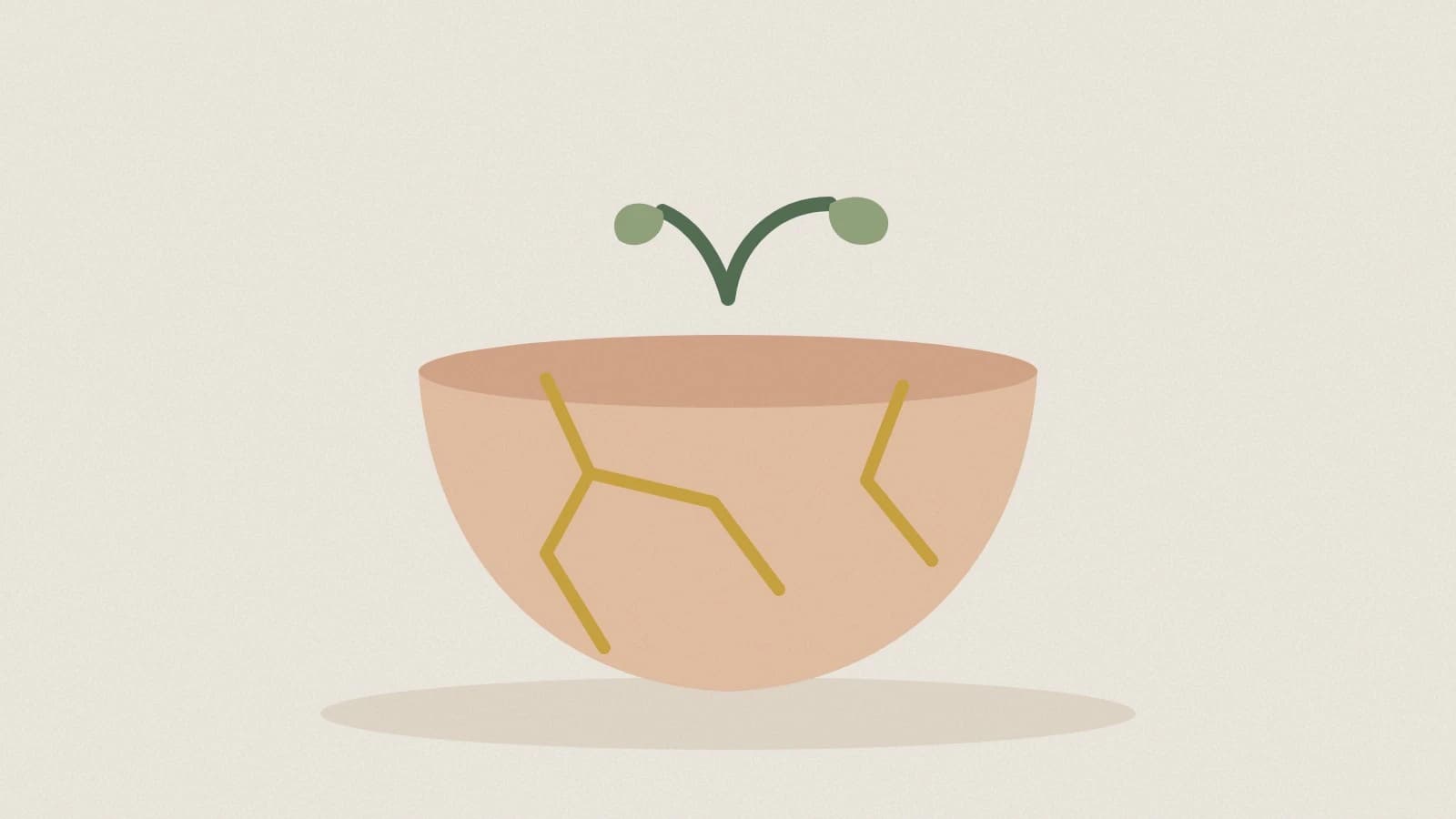
In Japan, a broken bowl is not thrown away; its cracks are joined with gold. The break is not hidden but becomes part of the bowl’s story. Here, too, our aim is not to erase what happened, but to make room to carry it, and to walk slowly toward a life where you can feel at home in yourself again.