
27 May 2026
Trauma, Social Denial, and the Process of Recovery: Rebuilding Trust
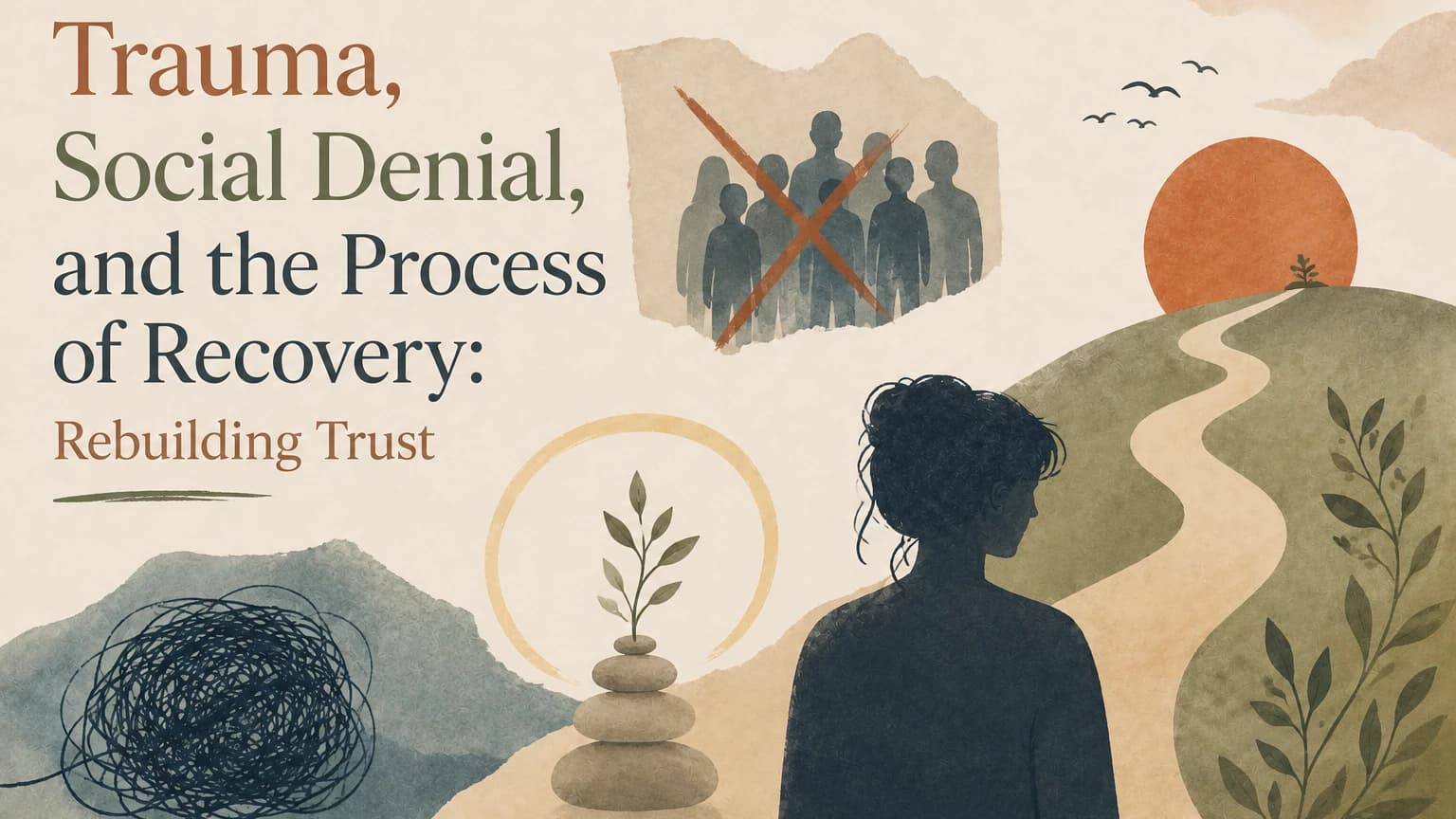
The Effects of Trauma
Trauma is an experience that can deeply affect an individual’s life and leave lasting imprints on physical, psychological, and social well-being. It is generally associated with life-threatening events such as accidents, natural disasters, or violence. However, trauma can also stem from experiences that may appear less immediately dangerous but can be equally devastating, such as ongoing emotional abuse, being held captive and helpless in threatening situations, bullying and harassment, or witnessing traumatic events. Someone subjected to continuous threat, bullying, or harassment may experience persistent fear, pressure, and emotional pain. Remaining in a prolonged state of alertness and fear can lead to helplessness, a sense of entrapment, and a loss of control, creating traumatic effects similar to those associated with physical violence.
Trauma can lead to numerous psychological consequences, including anxiety, depression, difficulties with emotional regulation, and a persistent sense of insecurity. Living in continuous fear and anxiety can result in a state of hypervigilance, making it difficult for a person to feel safe and relax in their environment. Furthermore, trauma can damage the ability to trust others, making it more difficult to establish secure attachments and maintain healthy relationships.
The Problem of Evil and the Social Dynamics of Trauma
In her work Trauma and Recovery, Judith Herman emphasizes that trauma studies have historically been subject to recurring periods of oblivion and rediscovery. According to Herman, this pattern is related less to changing intellectual trends than to the fundamental beliefs that the study of trauma brings into question (Herman, 1992). In her view, this is not merely a matter of shifting intellectual fashions, but a consequence of the intense controversies and fundamental challenges to our belief systems that the subject evokes. Herman examines how social dynamics can facilitate trauma while also interfering with recovery, arguing that the study of trauma forces us to confront both human vulnerability and “the capacity for evil in human nature.”
Compared with natural disasters or accidents, human-inflicted trauma raises more complex questions about responsibility, morality, and reality. As Herman (1992) argues, witnesses to human-inflicted traumatic events become caught in the conflict between victim and perpetrator. Within this conflict, remaining neutral becomes morally impossible; the witness is compelled to take a side (p. 7). Siding with the victim requires acknowledging the reality of the trauma, sharing some of the burden of the pain, and demanding accountability. In doing so, we may be forced to confront realities that shatter our assumptions about safety and justice. As a form of psychological defense, this discomfort can contribute to the denial and minimization of trauma. It may be easier to side with the perpetrator and preserve the illusion of a “safe and just world.”
The human mind tends to reject forms of evil that exceed its capacity for comprehension. This rejection can create an atmosphere of disbelief and resistance in which horrifying events are able to thrive. Operating as a defense mechanism at both individual and societal levels, denial can arise from the desire to avoid confronting an unacceptable reality.
The Holocaust is one of the most striking historical examples of this phenomenon. When the horrors of the Holocaust came to light, the world struggled for a long time to comprehend the reality and scale of such atrocities. The difficulty of believing that systematic violence on such a scale could occur demonstrates how vulnerable human beings can be when confronted with forms of evil that exceed ordinary expectations. Because horrifying events often take place in secrecy and may be ignored by societies that would prefer not to believe them, evil can gain strength in this darkness.
Perpetrators may rely on this denial to continue their actions. Until people confront the reality of such events, optimism, naivety, or an unwillingness to believe that such things can happen may unintentionally create space in which abuse can continue. The denial and minimization of trauma allow individuals and societies to retreat into the comforting belief that “terrible things do not really happen.” Yet this denial can reinforce the negative cycle created by trauma and leave victims feeling increasingly isolated and helpless.
Social responses can further erode trust by silencing victims and undermining their credibility. As Herman emphasizes, perpetrators use secrecy and silence to evade responsibility for their actions. By encouraging forgetting, they seek to secure impunity (Herman, 1992).
When secrecy is no longer possible, the perpetrator may instead attack the victim’s credibility and reputation, using a range of arguments to deny, rationalize, or justify the abuse. Herman describes a recurring pattern following atrocities: the event never happened; the victim is lying; the victim is exaggerating; the victim brought it upon themselves; and, in any case, it is now time to forget the past and move on (Herman, 1992, p. 8).
When a victim describes an experience that is difficult to believe, their account may be interpreted as delusional or hallucinatory and associated with a psychotic disorder. The power dynamics surrounding trauma can allow the perpetrator’s version of events to prevail, particularly when the victim occupies a weaker position. As Herman observes, the more powerful the perpetrator, the greater their privilege to define reality and the greater the weight given to their arguments (Herman, 1992, p. 8).
This dynamic can become particularly problematic when individuals are deliberately targeted by powerful individuals, institutions, or state actors, for example because of their political or professional activities, because they are whistleblowers, or because they have exposed wrongdoing. Persecution, surveillance, intimidation, reputational attacks, and other forms of targeted repression are real phenomena; at the same time, accounts of such experiences may appear unusual or difficult for outsiders to believe. Particularly when an individual is already psychologically distressed or develops symptoms such as anxiety, hypervigilance, and mistrust as a consequence of these experiences, there is a risk that their account may be prematurely interpreted solely as evidence of a psychiatric disorder. This creates a particularly complex clinical and social dilemma: real persecution can produce psychological symptoms, while those very symptoms may, in turn, make reports of persecution appear less credible. A careful assessment should therefore neither uncritically confirm extraordinary claims nor pathologize them simply because they appear unusual. Instead, evaluators to whom such grievances are reported must examine the power asymmetries, the positioning of the actors responsible for the harm, the content and context of the narrative, the available evidence, and the individual's psychological state in a holistic manner.
When such nuanced understanding is absent, the resulting disbelief or misdiagnosis isolates the targeted individual, invalidating their pain and compounding the initial trauma. Herman observes that without a supportive social environment, witnesses frequently succumb to the temptation to look away. If the victim is already socially devalued, for example because they are a woman or a child, the most traumatic experiences of their life may remain outside the realm of socially validated reality. What they have experienced becomes “unspeakable” (Herman, 1992, p. 8).
The tendency to discredit and silence trauma victims is a recurring theme in trauma studies. Pointing to the continuing debate surrounding the credibility of trauma victims and the reality of their experiences, Herman emphasizes that overcoming society’s resistance to acknowledging traumatic reality remains a persistent challenge (Herman, 1992).
This demonstrates how important it is to create a social environment that supports victims and validates their experiences. Such an environment can allow them to break their silence, reclaim their experiences, and begin the process of trauma recovery and healing.
Rebuilding Trust and the Recovery Process
Rebuilding trust is one of the most critical steps in the recovery process after trauma. Trauma can profoundly disrupt an individual’s trust in other people, in themselves, and in the world. Creating safe spaces in which survivors feel validated and empowered to regain a sense of control and autonomy is therefore vital to fostering an environment that supports healing and growth.
This requires not only individual support but also systemic change and trauma-informed approaches in areas such as healthcare, education, social services, and the justice system. A comprehensive response to trauma therefore involves not only addressing its psychological effects on the individual, but also examining the social and institutional conditions that can either support or obstruct recognition, safety, and recovery.
This article was prepared in part based on Judith Herman’s Trauma and Recovery (1992).
The content on this website is for general information only and does not constitute medical advice, diagnosis, or treatment, nor is it a substitute for consultation with a physician. Always consult a qualified physician regarding any current or planned medical or pharmacological treatments.
Related articles
Why Doesn’t Trauma Stay in the Past? The Nervous System and Brain After Trauma
This article explains why trauma does not remain in the past, exploring how the brain’s alarm system, amygdala, hippocampus, and prefrontal cortex keep the nervous system in a state of hypervigilance, and how healing restores balance over time.
Read more →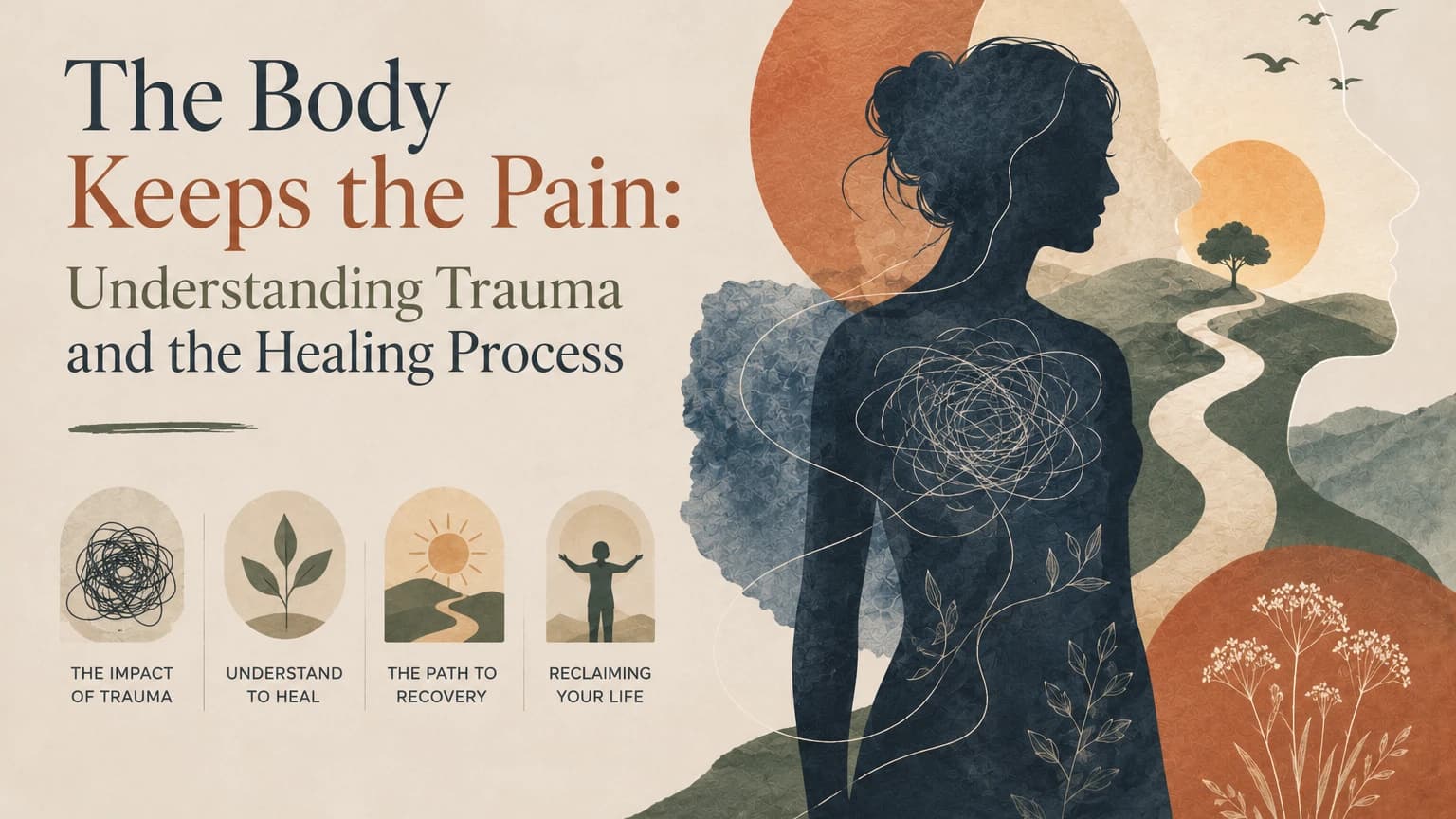
The Body Keeps the Pain: Understanding Trauma and the Healing Process
Trauma is more than a painful event from the past—it is a multidimensional experience that can leave lasting imprints on the mind, brain, and body. This article explores how trauma affects connection, relationships, and emotional well-being, while highlighting how healing can emerge through safety, human connection, and a holistic approach.
Read more →
Emotional Abuse: Signs, Gaslighting and Hidden Patterns
Emotional abuse can be difficult to recognize. Learn how manipulation, gaslighting, control, and isolation can affect self-esteem, trust, and relationships.
Read more →